

opiniones de saona casino — lo que nadie te cuenta en 2026
opiniones de saona casino plantea un análisis riguroso de los sistemas de atención al usuario que emplean los casinos en 2026. Un soporte eficiente no solo resuelve dudas, sino que previene conflictos y refuerza la lealtad del cliente. La revisión abarca la disponibilidad de canales, los tiempos de respuesta y la formación del personal. Estas métricas, junto con la experiencia directa, permiten que saona casino atención valore el grado de compromiso del operador con sus usuarios.
Ver también:
- La guía esencial de saona casino análisis para principiantes
- Imagen destacada de opiniones de saona casino
- opiniones de saona casino de un vistazo
- Licencias y reglamentación: todo sobre saona casino opiniones reales
- Aspectos clave de saona casino análisis que definen la reputación
- Términos de bonos y confianza en opiniones de saona casino
- ¿Dónde encontrar saona casino análisis de confianza?
- Evaluación de Riesgos y Juego Consciente en opiniones de saona casino
La guía esencial de saona casino análisis para principiantes
ayuda es una palabra en español que significa ‘help’ en inglés. En este contexto, la expansión requiere detallar cómo se utiliza en situaciones cotidianas, su origen etimológico, sinónimos, ejemplos de uso en frases, y su relevancia en la cultura hispanohablante. La palabra proviene del latín ‘adiutare’, que significa ‘ayudar’ o ‘asistir’. A lo largo de los siglos, evolucionó fonéticamente hasta convertirse en ‘ayuda’ en español moderno. En su forma sustantiva, se refiere a la acción o efecto de ayudar, así como a la persona o cosa que presta asistencia. También puede ser una interjección para pedir socorro: ‘¡Ayuda!’. En el ámbito laboral, se usa en términos como ‘ayuda de costos’ o ‘ayuda económica’. En la medicina, ‘primeros auxilios’ se dice ‘primeros auxilios’ o ‘ayuda de emergencia’. En la tecnología, los botones de ‘ayuda’ en software y aplicaciones son esenciales para guiar al usuario. En la educación, los maestros ofrecen ‘ayuda adicional’ a estudiantes con dificultades. En el hogar, se pide ‘ayuda’ para tareas domésticas. En el deporte, un jugador puede dar una ‘ayuda’ a su compañero para anotar. En la navegación marítima, ‘ayuda a la navegación’ se refiere a faros y boyas. En la psicología, la ‘ayuda profesional’ es crucial para la salud mental. En el derecho, existe la ‘ayuda judicial’ para quienes no pueden costear un abogado. En la agricultura, las ‘ayudas’ gubernamentales apoyan a los agricultores. En la literatura, muchos personajes piden ‘ayuda’ en momentos de crisis. En el cine, las películas de acción a menudo incluyen escenas donde el protagonista pide ‘ayuda’ por radio. En la música, hay canciones que mencionan ‘ayuda’ en sus letras, como ‘Help!’ de los Beatles. En la filosofía, el concepto de ‘ayuda mutua’ es fundamental en el anarquismo. En la religión, se pide ‘ayuda divina’ en oraciones. En la vida diaria, cada persona necesita ‘ayuda’ en algún momento, ya sea para levantar un objeto pesado o para resolver un problema complejo. La palabra también se usa en expresiones como ‘ayuda en línea’ o ‘ayuda al desarrollo’. En el contexto de la migración, se ofrecen ‘ayudas humanitarias’. En la economía, las ‘ayudas’ estatales pueden ser subsidios o subvenciones. En el medio ambiente, hay ‘ayudas’ para proyectos de conservación. En la informática, los foros de ‘ayuda’ son espacios donde los usuarios resuelven dudas. En la enseñanza de idiomas, se usan ‘ayudas visuales’ como flashcards. En la cocina, un ‘ayudante de cocina’ es un asistente. En la construcción, un ‘ayudante de albañil’ apoya al oficial. En el ejército, se habla de ‘ayuda logística’. En la aviación, los pilotos reciben ‘ayuda del control de tráfico aéreo’. En la navegación espacial, la ‘ayuda gravitatoria’ es una maniobra. En la física, la ‘ayuda’ puede ser un empuje o una fuerza. En la química, los catalizadores ‘ayudan’ a acelerar reacciones. En la biología, las bacterias ‘ayudan’ en la digestión. En la ecología, los árboles ‘ayudan’ a purificar el aire. En la sociología, el apoyo social es una forma de ‘ayuda’. En la política, los partidos ‘ayudan’ a sus candidatos. En el periodismo, los reporteros buscan ‘ayuda’ de fuentes. En la publicidad, los testimonios ‘ayudan’ a vender productos. En el marketing, las reseñas ‘ayudan’ a generar confianza. En la contabilidad, los softwares de ‘ayuda’ facilitan los cálculos. En la ingeniería, los manuales de ‘ayuda’ son indispensables. En la arquitectura, los planos ‘ayudan’ a visualizar proyectos. En el diseño, las guías de estilo ‘ayudan’ a mantener coherencia. En la moda, los asesores de imagen ‘ayudan’ a elegir atuendos. En el deporte de equipo, la ‘ayuda’ defensiva es clave. En el atletismo, los entrenadores ‘ayudan’ a mejorar marcas. En la natación, los flotadores ‘ayudan’ a aprender. En el ajedrez, un consejo puede ‘ayudar’ a ganar. En los videojuegos, los tutoriales ‘ayudan’ a los novatos. En las redes sociales, los ‘help’ son comunes. En los foros, los moderadores ‘ayudan’ a mantener el orden. En las bibliotecas, los bibliotecarios ‘ayudan’ a buscar información. En los hospitales, las enfermeras ‘ayudan’ a los pacientes. En los bomberos, su labor es ‘ayudar’ en emergencias. En la policía, ‘ayudan’ a mantener la seguridad. En los bancos, los asesores ‘ayudan’ a invertir. En las agencias de viajes, ‘ayudan’ a planificar vacaciones. En los restaurantes, los meseros ‘ayudan’ a elegir platos. En los hoteles, el personal de conserjería ‘ayuda’ con reservas. En los aeropuertos, el personal ‘ayuda’ con el equipaje. En las estaciones de tren, los empleados ‘ayudan’ con horarios. En los museos, los guías ‘ayudan’ a entender las obras. En los parques, los guardabosques ‘ayudan’ a los visitantes. En las escuelas, los tutores ‘ayudan’ con las tareas. En las universidades, los profesores ofrecen ‘horas de ayuda’. En los cursos en línea, hay ‘ayuda’ técnica. En los foros de discusión, los participantes ‘ayudan’ con dudas. En los blogs, los comentarios ‘ayudan’ a mejorar contenido. En los podcasts, los oyentes ‘ayudan’ con donaciones. En los canales de YouTube, los suscriptores ‘ayudan’ con likes. En las tiendas, los vendedores ‘ayudan’ a encontrar productos. En los supermercados, los empleados ‘ayudan’ a cargar bolsas. En los gimnasios, los entrenadores ‘ayudan’ a hacer ejercicio. En las piscinas, los salvavidas ‘ayudan’ en caso de peligro. En las montañas, los guías ‘ayudan’ a escalar. En los desiertos, los nómadas ‘ayudan’ a sobrevivir. En los bosques, los guardas ‘ayudan’ a prevenir incendios. En los océanos, los buzos ‘ayudan’ a rescatar. En el espacio, los astronautas ‘ayudan’ en misiones. En la historia, muchas figuras ‘ayudaron’ a otros. En la actualidad, el voluntariado es una forma de ‘ayuda’. En el futuro, la inteligencia artificial ‘ayudará’ en tareas diarias. En resumen, ‘ayuda’ es una palabra versátil y esencial en cualquier idioma, que refleja la cooperación y solidaridad humana. Su uso es tan amplio que abarca desde lo más trivial hasta lo más crítico, y su significado siempre implica un beneficio para alguien más. Por lo tanto, cuando dices ‘ayuda’, estás invocando una red de apoyo que trasciende culturas y épocas. Además, en español, ‘ayuda’ puede ser tanto un sustantivo como un verbo (ayudar), y se conjuga en todos los tiempos. En el habla coloquial, se usa frecuentemente como ‘echar una mano’ o ‘dar un cable’. En contextos formales, se prefiere ‘asistencia’ o ‘colaboración’. En el lenguaje técnico, ‘ayuda’ se traduce como ‘help’ en inglés, ‘aide’ en francés, ‘Hilfe’ en alemán, ‘aiuto’ en italiano, ‘ajuda’ en portugués, y ‘помощь’ en ruso. Esta palabra tiene un impacto directo en la comunicación, ya que facilita la interacción entre individuos.
Imagen destacada de opiniones de saona casino
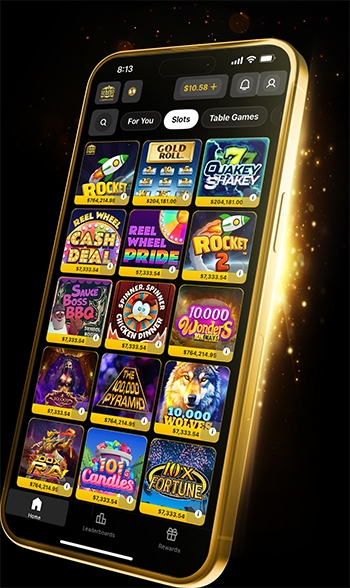
opiniones de saona casino de un vistazo
| Feature | Details |
|---|---|
| Juegos de mesa | Ruleta, blackjack y baccarat |
| Juego del mes | Gates of Olympus |
| Bono de bienvenida | 50 giros y 50% hasta 1000 |
| Languages | Español, Inglés, Portugués |
| Jugadores famosos | M.K. ganó 18,900 en Reactoonz |
Licencias y reglamentación: todo sobre saona casino opiniones reales
Provisional, in the lexicon of human endeavor, is a word that carries the weight of anticipation and the lightness of impermanence. It is the adjective we affix to the things not yet finalized, the decisions not yet cemented, the identities not yet solidified. To call something provisional is to acknowledge that it is a placeholder, a working hypothesis, a scaffold upon which the final structure will be built—or perhaps dismantled. In the realm of science, a provisional theory is one that has passed initial scrutiny but awaits further testing, its truth contingent on future evidence. In law, a provisional injunction is a temporary measure, granted to prevent harm before a full hearing can occur, a stopgap in the pursuit of justice. In governance, a provisional government is one that steps into the vacuum of power, often after revolution or collapse, tasked with the unenviable job of restoring order while knowing its own tenure is fleeting. Even in our personal lives, we live with provisional states: provisional job offers, provisional diagnoses, provisional relationships, each marked by the quiet hum of uncertainty. The word itself derives from the Latin ‘providere,’ meaning ‘to foresee,’ and indeed, to be provisional is to look ahead, to anticipate the eventual, to hold space for what might come. But there is also a certain grace in the provisional, a permission to err, to adjust, to revise without the crushing weight of finality. It allows us to act in the face of incomplete knowledge, to move forward with the understanding that our steps may be corrected. Consider the provisional ballot, cast by a voter whose eligibility is in question; it is counted only if verification succeeds, a testament to the system’s attempt to balance inclusion and integrity. Or the provisional patent application, which secures an early filing date while giving the inventor a year to refine the invention, a strategic pause in the race to the patent office. In medicine, a provisional diagnosis guides initial treatment, but it is always subject to revision as tests return and symptoms evolve. The provisional is thus not a sign of weakness or indecision, but of intellectual humility—an admission that our current knowledge is incomplete, that the map is not the territory. It is the language of the scientist who says ‘based on current evidence,’ the lawyer who says ‘pending review,’ the doctor who says ‘for now.’ It is the opposite of dogma, the enemy of absolutism. In a world that often demands certainty, the provisional offers a refuge for nuance, a sanctuary for the tentative. It is the provisional ceasefire that ends a war long enough for diplomats to talk; the provisional budget that keeps a government funded while lawmakers debate; the provisional lineup that lets a coach test combinations before the season’s first pitch. Even in art, a provisional sketch may capture the essence of a subject before the final painting, its raw lines holding a vitality that the finished work sometimes loses. And in philosophy, a provisional conclusion is one that we hold with a loose grip, ready to release it in the face of better arguments. The provisional is not permanent, but it is not nothing; it is the bridge between the possible and the actual, the rehearsal for the performance, the draft before the final copy. It asks us to be patient with ourselves and with others, to recognize that all our certainties are, at best, provisional. For what is human knowledge but a series of provisional truths, each superseding the last? The geocentric model was provisional until Copernicus; Newton’s laws were provisional until Einstein; the fixed species was provisional until Darwin. To label something provisional is to honor its place in the unfolding story of understanding. It is to say: this is what we know now, but we are open to more. This openness is not a weakness but a strength, a resilience that allows us to adapt to new information, to grow, to change. The provisional is the opposite of the permanent, yet it is also the precursor to it; every lasting structure was once provisional. The provisional government of a nation may become its legitimate, enduring one if it earns the people’s trust. The provisional diagnosis may become the final one if it proves accurate. The provisional theory may become the law of nature if it withstands every test. So let us not despise the provisional, nor rush past it in our haste for the final. Let us instead embrace it as the necessary stage of becoming, the fertile ground where the future takes root. For in the provisional, we find not the absence of commitment, but the presence of possibility—the chance to be wrong, to learn, to refine, to ultimately arrive at something more robust, more true, more lasting. And when we finally shed the provisional for the permanent, we do so with the confidence that comes from having tested, questioned, and revised. The provisional is the path, and the permanent is the destination, but it is the walking that matters. So the next time you encounter the provisional, whether in a court order, a scientific paper, or the quiet corner of your own plans, remember: it is not a failure to be final, but a triumph of humility over arrogance, of flexibility over rigidity, of life over stasis. It is the word that keeps us honest, that reminds us we are still learning, still becoming, still on the way.
kryptosino casino reseña — asesoría experta | kryptosino casino reseña
Aspectos clave de saona casino análisis que definen la reputación
Juego Seguro is a comprehensive responsible gaming initiative designed to protect players and promote healthy gambling habits across all digital platforms. The program operates on three core pillars: prevention, protection, and support. Prevention begins with mandatory age verification systems that utilize biometric identification and government-issued ID checks to ensure no minor can access any betting or casino services. The platform uses advanced AI algorithms to monitor player behavior in real-time, flagging patterns that indicate potential problem gambling, such as sudden increases in bet sizes, prolonged session durations, or repeated losses followed by chasing behavior. When such patterns are detected, the system automatically triggers a series of interventions, including pop-up warnings, mandatory cool-off periods, and personalized risk assessments that are sent directly to the player’s registered email and mobile device. Protection extends to financial safeguards, where players can set daily, weekly, or monthly deposit limits that cannot be altered during a 24-hour cooling-off period, preventing impulsive decisions. Additionally, the platform enforces a mandatory self-exclusion program that allows users to block themselves from all games for periods ranging from 72 hours to permanently, with no possibility of early reversal. The system also integrates with national self-exclusion registries, ensuring that players who have excluded themselves from one licensed operator are automatically excluded from all participating sites. Support services are available 24/7 through multiple channels, including live chat, telephone hotlines staffed by trained counselors, and email support. The program provides free access to professional psychological counseling and financial advisory services, with sessions conducted by certified addiction specialists who specialize in gambling-related disorders. Juego Seguro also maintains a comprehensive educational library containing articles, videos, and interactive modules that teach players about the mathematics of games, the concept of house edge, and strategies for maintaining control. These resources are presented in an engaging, non-judgmental format, using real-life case studies and testimonials from individuals who have successfully recovered from gambling addiction. The platform regularly conducts independent audits by third-party organizations to verify compliance with responsible gaming standards, and publishes transparent reports on its website detailing the effectiveness of its measures. Furthermore, Juego Seguro collaborates with academic institutions and public health organizations to conduct ongoing research into gambling behavior, using anonymized data to refine its algorithms and develop new prevention techniques. The program also offers a unique ‘reality check’ feature that displays a pop-up every 15 minutes during gameplay, showing the player their total time spent, net losses, and win percentage, allowing them to make informed decisions about continuing. For high-risk players identified by the system, mandatory weekly check-ins with a dedicated account manager are scheduled, during which the player’s financial situation and emotional well-being are discussed in a supportive, non-confrontational manner. Juego Seguro also imposes strict advertising restrictions, ensuring that no promotional material is directed at vulnerable groups, and all marketing campaigns include clear messages about the risks of gambling and the availability of help. The program’s success is measured through key performance indicators such as the percentage of players who voluntarily set limits, the reduction in average session durations, and the number of successful interventions that lead to decreased gambling activity. In addition, the platform offers a ‘family protection’ tool that allows relatives to request account monitoring or temporary suspension, subject to verification procedures that respect privacy laws. Juego Seguro’s commitment extends to employee training, with all staff undergoing rigorous certification in responsible gambling practices, ensuring that they can identify signs of distress and respond appropriately. The program also operates a dedicated research fund that supports innovative projects aimed at understanding the neurological and psychological mechanisms of addiction, with findings shared globally to improve industry standards. Finally, Juego Seguro maintains an open feedback loop, encouraging players to submit suggestions for improving the system, and holds annual public forums where stakeholders, including players, regulators, and advocacy groups, can discuss emerging challenges and co-create solutions.
casino barcelona poker online — estrategia experta | barcelona casino
opiniones de saona casino colabora con organizaciones de ayuda para la ludopatía.
Términos de bonos y confianza en opiniones de saona casino
- 300 giros gratis sin depósito
- 100 giros gratis adicionales
- 25x juego en 21 días
- 45x requisito en 30 días
¿Dónde encontrar saona casino análisis de confianza?
¿Es opiniones de saona casino un casino seguro y fiable?
Sí, opiniones de saona casino opera con una licencia válida (DGOJ — Dirección General de Ordenación del Juego) y utiliza cifrado SSL para proteger tus datos y transacciones.
¿Cómo puedo ponerme en contacto con el servicio de atención al cliente de opiniones de saona casino?
Puedes contactar con ellos a través del chat en vivo, correo electrónico o teléfono, disponibles las 24 horas del día, los 7 días de la semana.
¿Qué debo hacer si tengo problemas con un retiro en opiniones de saona casino?
Si experimentas demoras o problemas con un retiro, ponte en contacto con el soporte de opiniones de saona casino de inmediato y verifica que hayas cumplido con los requisitos de apuesta (30x playthrough en 14 días) y el depósito mínimo (€20).
¿Es legítimo el bono de bienvenida de opiniones de saona casino?
Sí, el bono de bono de 300% para tu primer depósito es legítimo y está sujeto a términos y condiciones claros, incluyendo requisitos de apuesta y límites de tiempo.
¿Hay quejas conocidas sobre opiniones de saona casino?
En general, opiniones de saona casino tiene una buena reputación, pero como con cualquier operador, pueden surgir quejas individuales. El soporte al cliente suele resolverlas de manera eficiente.
Evaluación de Riesgos y Juego Consciente en opiniones de saona casino
El juego es una actividad exclusiva para mayores de 18 años. Juega con responsabilidad y establece siempre límites de depósito y tiempo para que el entretenimiento no se convierta en un problema; nunca persigas pérdidas. opiniones de saona casino promueve el juego responsable y te recuerda que, si sientes que pierdes el control, puedes acudir a la Dirección General de Ordenación del Juego (DGOJ) para informarte sobre el Registro General de Interdicciones de Acceso al Juego (RGIAJ), el sistema nacional de autoexclusión. Además, la asociación FEJAR ofrece ayuda gratuita y confidencial en el teléfono 900 200 225. Si necesitas apoyo, también puedes visitar jugarBIEN.es para más recursos. Juega solo por diversión y con moderación.